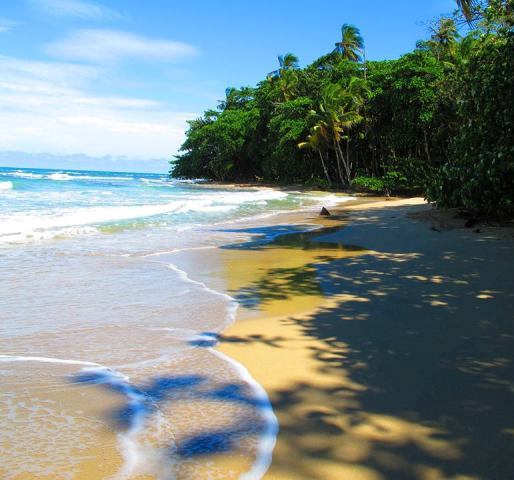


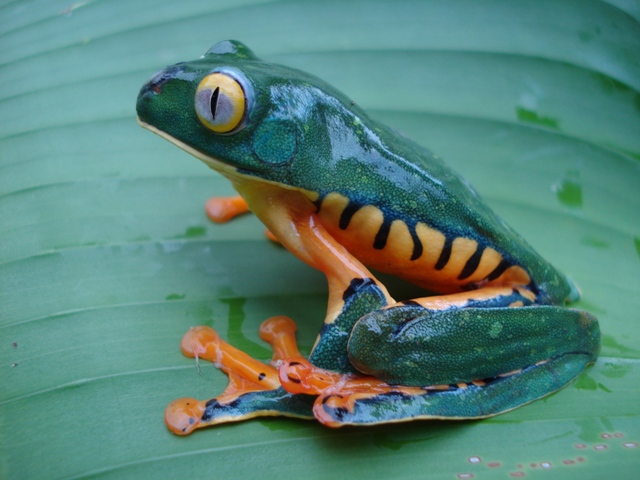
Costa Rica’s Caribbean coast is one of the country’s most rewarding regions for travelers hoping to encounter wildlife in natural surroundings. Around Puerto Viejo, Punta Uva and Manzanillo, tropical rainforest reaches almost to the shoreline, creating habitat for sloths, howler monkeys, toucans, frogs, butterflies and many other species. Wildlife encounters aren’t limited to organized tours or protected-area trails, either. Look carefully into the canopy while walking near Punta Uva, listen for howler monkeys early in the morning, or simply watch the trees surrounding a forested hotel, and nature may become part of an ordinary moment in your day.
In this corner of Costa Rica, wildlife rarely waits for an invitation.
A breakfast conversation can stop abruptly when branches begin moving above the terrace. The distant growl that sounds improbably large for something hidden in the canopy turns out to be a troop of howler monkeys. A flash of yellow and black crosses the garden. Somewhere among the leaves, a sloth has been present for hours before anyone notices it.
This is one of the pleasures of the South Caribbean: nature is not confined behind the entrance to a national park.
The rainforest threads through Punta Uva and Manzanillo, follows the shoreline and surrounds homes, small hotels and roads. Immediately south lies the Gandoca-Manzanillo Wildlife Refuge, whose remarkable mosaic of terrestrial, freshwater and marine habitats supports 377 recorded bird species, 38 mammal species and more than 1,200 species of butterflies and moths, according to Costa Rica’s National System of Conservation Areas (SINAC).
For travelers who came to Costa Rica hoping to see wildlife, sometimes the first thing to do is simply look up.

What Animals Can You See Near Puerto Viejo and Punta Uva?
Wildlife around Puerto Viejo and Punta Uva includes sloths, howler and white-faced capuchin monkeys, toucans and other tropical birds, frogs, iguanas, butterflies and numerous other rainforest species. The neighboring Gandoca-Manzanillo Wildlife Refuge protects terrestrial and marine habitats that also support monkeys, birds, amphibians and reptiles.
What makes the experience particularly interesting is the variety of habitats compressed into a relatively small stretch of coastline.
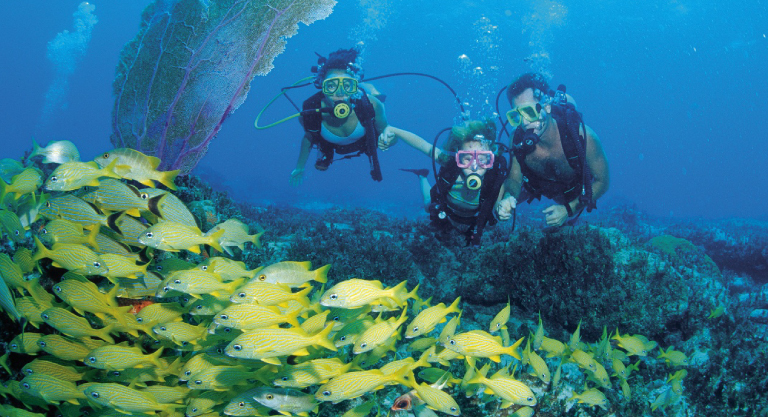
Forest meets beach. Rivers and wetlands interrupt the greenery. Coral reefs lie offshore. Gardens merge almost imperceptibly with surrounding vegetation.
The result is that wildlife watching becomes part of everyday travel rather than an activity reserved for a particular excursion.
Sloths: Masters of Not Being Seen
Both two-toed and three-toed sloths occur in Costa Rica, and the forested Caribbean region provides excellent opportunities for spotting sloths in the canopy.
Finding one is another matter.
Sloths are astonishingly good at disappearing in plain sight. What initially looks like a bundle of dried leaves high in a tree may, after several seconds of concentration, acquire an arm. Then a face.
Local guides are invaluable precisely because they have learned to recognize shapes the rest of us overlook.
But around Punta Uva, you may also find yourself becoming a better observer. Instead of searching for an entire animal, watch for an unusual silhouette, movement among otherwise still branches, or other people staring intently upward.
Once you spot your first sloth without assistance, the forest never looks quite the same again.
Howler Monkeys: The Caribbean’s Natural Alarm Clock
You may hear a howler monkey long before you see one.
Their deep calls travel through the forest, particularly around dawn and at other periods of activity. To an unsuspecting first-time visitor, the sound can seem far too powerful to have come from an animal sitting peacefully in a tree.
Look toward the canopy and you may eventually locate the troop moving between branches.
They are one reason an early morning around Punta Uva can be more memorable than sleeping late.
There is also something reassuringly Caribbean about realizing that the day’s first announcement came not from an alarm, a phone or a hotel corridor—but from the forest.
Toucans and the Birds Above You
Wildlife watching in the South Caribbean requires looking in several directions at once.
The understory may hide frogs and butterflies, but much of the action takes place overhead.
Toucans are among the region’s most recognizable residents, their oversized bills making them considerably easier for inexperienced birdwatchers to identify than many smaller species. But they are only part of the story.
The Gandoca-Manzanillo Wildlife Refuge alone has recorded 377 bird species, making the forests around Punta Uva and Manzanillo particularly interesting for birders as well as casual observers. SINAC
You don’t need to arrive with binoculars and a life list to appreciate them.
Sit quietly with coffee in the morning and listen first. Eventually you begin separating one call from another. Then you start watching for movement.
This is how people who insist they are “not birdwatchers” sometimes discover that they have spent half an hour watching birds.
Frogs: Wait Until After Dark
When daylight disappears, another rainforest shift begins.
Frogs that were almost impossible to locate during the afternoon become more active, particularly in humid conditions and around vegetation and water. Their calls join insects and other nocturnal sounds until the forest after dark feels almost entirely different from the one experienced that morning.
This is where a guided night walk can be especially worthwhile.
A knowledgeable guide knows where to look and can help visitors observe small nocturnal creatures without disturbing them.
A flashlight beam catching the outline of a tiny frog on a leaf can be every bit as memorable as seeing a monkey overhead.
Butterflies: Wildlife in Motion
Not every wildlife encounter requires binoculars.
Butterflies move through sunny openings, gardens and forest edges, sometimes appearing as sudden flashes of color against an overwhelmingly green background.
Their diversity here is extraordinary. SINAC records 1,231 species of diurnal and nocturnal butterflies and mothswithin the Gandoca-Manzanillo Wildlife Refuge.
The famous blue morpho may command attention when its electric-blue wings appear between the trees, but slowing down reveals far more.
Butterfly watching is a useful reminder of something the rainforest teaches repeatedly: the spectacular isn’t always large.

Wildlife Watching Around Puerto Viejo: Where Should You Go?
The best places for wildlife watching near Puerto Viejo include the forests around Punta Uva and Manzanillo, Gandoca-Manzanillo Wildlife Refuge and Cahuita National Park. Forested hotel grounds and roadside vegetation can also produce unexpected sightings.
| Where | What Makes It Special | Wildlife Experience | Best Approach |
| Punta Uva | Rainforest, beach and forest edges | Sloths, monkeys, toucans, butterflies and other birds | Early-morning walk |
| Manzanillo | Village beside protected forest | Monkeys, birds, reptiles and rainforest wildlife | Walk slowly and watch the canopy |
| Gandoca-Manzanillo Wildlife Refuge | Protected terrestrial and marine ecosystems | Birds, mammals, amphibians, reptiles and marine species | Guided nature walk |
| Cahuita National Park | Coastal forest, beaches and coral ecosystem | Monkeys, sloths, birds and reptiles | Morning trail walk |
| Forested accommodations | Wildlife habitat immediately around your stay | Opportunistic sightings of birds, monkeys, sloths and butterflies | Watch quietly at dawn and late afternoon |
The Gandoca-Manzanillo Wildlife Refuge is particularly significant. SINAC describes an area of primary forest patches alongside freshwater and marine habitats, as well as coral reefs offshore from Punta Uva, Manzanillo and Punta Mona.
But don’t make the mistake of concentrating only on protected-area entrances.
On the South Caribbean coast, the journey between them can be part of the wildlife experience.
Seven Simple Ways to See More Wildlife
Wildlife watching is partly luck. It is also about learning how to look.
- Go early. Dawn and the first hours of morning can be particularly rewarding for birds and monkeys.
- Slow down. Walking quietly reveals considerably more than moving quickly through a trail.
- Look up—and then look up again. Sloths can remain almost invisible even directly overhead.
- Listen before looking. Howlers, frogs and birds frequently announce their presence first.
- Bring binoculars. Even a compact pair transforms bird and canopy viewing.
- Hire a local naturalist guide at least once. A good guide doesn’t merely find animals; they teach you how to notice the forest.
- Give wildlife space. A better photograph is never worth stressing an animal.
And don’t become so focused on finding the animal on your wish list that you miss everything else.
The rainforest rarely follows an itinerary.
Ethical Wildlife Tourism: Watch, Don’t Interfere
Ethical wildlife watching means observing wild animals at a respectful distance without touching, feeding, handling or deliberately disturbing them.
That distinction matters.
A sloth hanging naturally in a tree is a wildlife encounter. A wild animal being passed between visitors for photographs is something very different.
Avoid feeding monkeys or other animals, even when they approach. Human food can alter natural behavior and encourages wildlife to associate people with food.
Keep voices low around animals. Stay on designated trails in protected areas. Never remove plants, shells or wildlife. SINAC specifically asks visitors to Gandoca-Manzanillo to remain on trails and respect the area’s flora and fauna. SINAC
For photography, distance is your friend. A zoom lens or binoculars creates a much better encounter than trying to get closer.
The goal should be wonderfully simple: leave the animal doing exactly what it was doing before you arrived.
Can You See Wildlife Without Taking a Tour?
Yes. Around Punta Uva and Manzanillo, it is entirely possible to see wildlife without taking a formal tour because rainforest and wildlife habitat surround beaches, roads, gardens and accommodations. A guided walk, however, usually increases both the number of species you notice and your understanding of what you are seeing.
This is an important distinction.
You don’t need to schedule every encounter.
You might see monkeys crossing through the canopy while heading to breakfast or notice a toucan while returning from the beach. A sloth may be occupying the same tree you walked past several times the previous day.
But a naturalist sees differently.
A guide can identify calls, find camouflaged animals, explain behaviors and reveal relationships between species and habitat that are easy to miss.
A good strategy is to take a guided nature walk early in your stay. For the rest of the trip, you’ll find yourself noticing much more.

Which Hotels Near Puerto Viejo Have Wildlife on the Property?
Hotels surrounded by established rainforest and mature vegetation south of Puerto Viejo can offer opportunities to see wildlife without leaving the property. Almonds & Corals Boutique Hotel, located between Punta Uva and Manzanillo, places guests in a forested setting close to the Gandoca-Manzanillo Wildlife Refuge.
That changes the rhythm of a wildlife vacation.
Instead of getting into a vehicle every time you want to experience nature, you begin watching from where you are.
At Almonds & Corals, a member of the Enchanting Hotels collection of ecoluxury, boutique hotels in Costa Rica, the rainforest is part of the setting rather than scenery viewed from a distance. Guests may encounter birds and other wildlife moving through the surrounding vegetation, while Punta Uva, Manzanillo and the wildlife refuge provide opportunities for deeper exploration nearby.
There is an important difference between staying near nature and staying within the experience of it.
A morning coffee becomes an opportunity to watch the canopy. Walking through the property becomes a reason to keep your eyes open. The sounds outside at night are reminders that the forest’s daily cycle continues long after you’ve gone to bed.
For wildlife lovers, proximity may be the most valuable hotel amenity of all.
When Is the Best Time for Wildlife Watching Near Puerto Viejo?
Wildlife can be seen around Puerto Viejo and Punta Uva throughout the year, and early morning is generally one of the most rewarding times of day for observation. Seasonal weather can influence individual species and activity, so there is no single month that guarantees the best wildlife experience.
Costa Rica’s official tourism site emphasizes that wildlife spectacles vary with natural cycles and that the Caribbean follows different rainfall patterns from the Pacific. Visit Costa Rica
For visitors, this means avoiding the temptation to think only in terms of “dry season equals good, rain equals bad.”
Rain is what sustains this forest.
After a shower, leaves glisten, frogs may become more vocal, and the rainforest takes on an intensity that is part of the South Caribbean experience.
For everyday wildlife watching, the better question may therefore be not which month? but what time should I wake up tomorrow?
The answer is early.
When the Rainforest Comes to You
Some Costa Rica wildlife experiences involve an alarm, hiking boots, a guide and several hours on a trail.
Others happen while you’re holding a cup of coffee.
That unpredictability is what makes the South Caribbean so rewarding.
You begin the trip hoping to see a sloth.
A few days later, you’re recognizing the call of a howler monkey before breakfast, scanning trees automatically as you walk toward Punta Uva and stopping mid-sentence because something with wings just crossed overhead.
The rainforest hasn’t changed.
You have simply learned to pay attention.
And perhaps that is the best wildlife experience Puerto Viejo can offer.
Frequently Asked Questions
Where can I see sloths near Puerto Viejo?
Punta Uva, Manzanillo, Cahuita National Park and forested areas around Puerto Viejo provide opportunities to see sloths in their natural habitat. Staying in a rainforest setting south of Puerto Viejo can also create opportunities for incidental sightings. A knowledgeable local guide can greatly improve your chances of finding camouflaged sloths in the canopy.
What animals live around Punta Uva?
Wildlife around Punta Uva includes sloths, monkeys, toucans and other tropical birds, frogs, reptiles, butterflies and numerous other rainforest species. Nearby Gandoca-Manzanillo Wildlife Refuge protects a particularly diverse combination of terrestrial, freshwater and marine habitats. SINAC
Which Costa Rica hotels offer wildlife experiences?
Hotels located within or beside intact forest can provide wildlife viewing as part of the stay rather than only through excursions. Almonds & Corals Boutique Hotel near Punta Uva and Manzanillo offers a rainforest setting close to the Gandoca-Manzanillo Wildlife Refuge, making it particularly suited to travelers interested in nature and wildlife.
When is the best time for wildlife viewing?
Early morning is often an excellent time for wildlife watching, particularly for birds and monkeys, while frogs and other nocturnal species are better observed after dark. Wildlife can be encountered throughout the year on Costa Rica’s South Caribbean coast.
Can I see wildlife without taking a tour?
Yes. Wildlife can often be spotted around Punta Uva and Manzanillo from beaches, roads, gardens and forested accommodations. A guided nature walk is still worthwhile because trained naturalists can locate camouflaged animals, identify species and explain behaviors that visitors might otherwise miss.