

A tiny bee returning to its hive offers a different perspective on Guanacaste’s natural beauty. At Hacienda Guachipelín, near Rincón de la Vieja National Park, stingless bee conservation in Costa Rica comes into focus through a project dedicated to protecting native colonies and helping their populations grow. For visitors, these small pollinators open a window onto the relationships between forest, flowers, honey, and the people caring for the landscape.
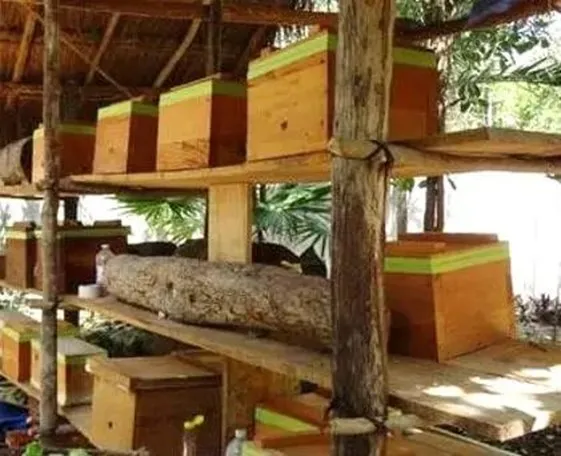
At Hacienda Guachipelín, protecting stingless bees has become part of the property’s conservation work. Presently, the hacienda manages more than 20 hives and an initiative focused on safeguarding colonies, supporting their reproduction, and helping people understand their importance. The project brings a different scale to the experience of nature: one small enough to watch at a hive entrance, yet connected to the surrounding ecosystem.
What Are Stingless Bees?
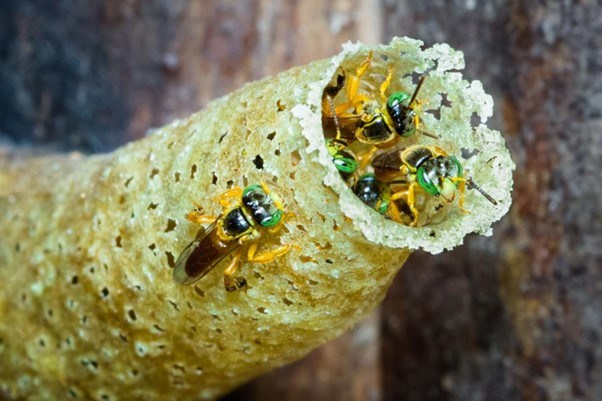
Stingless bees belong to the tribe Meliponini, a group that includes different genera and species. Although “melipona” is often used broadly in everyday conversation, Melipona is also the scientific name of one particular genus. The distinction matters when identifying bees and understanding their needs.
These bees lack a functional sting, but they should still be observed respectfully. Their nests are living colonies, not objects to open or handle casually.
A Different Way to Notice Wildlife
Watching bees changes the pace of a nature experience. Instead of waiting for a large animal to appear, you concentrate on something happening continuously in front of you.
For visitors, that can be an introduction to a less conspicuous part of biodiversity. A small insect moving between flowers becomes a reason to ask questions about plants, nesting places, and the relationships that sustain a landscape.
Why Their Conservation Matters
Bees need suitable food sources and places to nest. Protecting them therefore involves looking beyond the hive itself to the surrounding vegetation and habitat.
The University of Costa Rica explains that the loss of nesting sites and floral resources can accompany urban development and simplified agricultural landscapes. Its work also highlights the relationship between native bees, pollination, and ecosystem regeneration.
A conservation story becomes more meaningful when visitors understand those connections. The flowers along a path and the trees around a property are part of a functioning environment, rather than simply scenery between activities.
At Hacienda Guachipelín, the bee initiative offers a way to bring that relationship into conversation. It encourages guests to appreciate the quieter processes behind the landscapes they enjoy.
Protecting Colonies at Hacienda Guachipelín
The Hacienda’s stated priorities combine care for existing colonies with efforts to help populations expand. Awareness is another part of the project: sharing knowledge about bees gives conservation a human dimension.
That educational role is valuable. A visitor may arrive knowing little about stingless bees and leave with a new interest in the insects around their own home.
The project also provides a subject for questions about how the property manages its natural surroundings. Which bees are present? What do they need? How can a hotel make room for wildlife alongside its daily operations? These questions turn sustainability into something visitors can explore rather than simply read on a sign.
Conservation Enriched by Scientific Discovery
Stingless bees continue to inspire scientific research in Costa Rica. At the University of Costa Rica, studies of their honey, associated microorganisms, and biological characteristics are expanding our understanding of these insects and their products.
This growing knowledge adds depth to the conservation experience at Hacienda Guachipelín. Learning about bees becomes an opportunity to explore how the life of a colony connects with wider questions about biodiversity, pollination, and the natural world.
For visitors, conservation and scientific discovery bring complementary perspectives to the experience, encouraging curiosity and a closer appreciation of these small but important inhabitants of Guanacaste.
Honey Production with the Colony in Mind
Honey is one part of stingless-bee keeping, also known as meliponiculture. Responsible management asks how products can be collected while protecting the colony and its continued development.
FAO’s technical resources address harvesting methods and approaches designed to reduce disturbance to brood, the developing young bees. The broader principle is important: production methods should account for the needs of the living colony.
Hacienda Guachipelín reports that its stingless-bee honey is used primarily in wellness treatments and is also available for guests to purchase. That provides a connection between conservation work and the visitor experience. It should be presented as a use of the product, without promising medical outcomes.
Bringing a Closer Look into Your Stay
A visit to Guanacaste can include both expansive views and small discoveries. Learning about bees adds another layer to a holiday built around nature, adventure, and time outdoors.
Ask the Hacienda Guachipelín team about the project and any opportunities to learn more during your stay. Follow staff guidance around colonies, avoid disturbing hive entrances, and let observation lead the experience.
The most lasting result may be a change in attention. After learning about stingless bees, a flowering plant or a tiny opening in a tree can become something worth noticing.
Discover Another Side of Guachipelín
Conservation is made tangible through specific actions and the people who sustain them. Guachipelín’s bee project gives visitors one such story to explore.
Plan your stay at Hacienda Guachipelín and ask about its stingless-bee initiative. Between the larger adventures of Rincón de la Vieja, leave time for a closer look at some of the landscape’s smallest inhabitants.
FAQs: Stingless Bees at Hacienda Guachipelín
Does Hacienda Guachipelín keep stingless bees?
Yes. Its published project information reports more than 20 hives.
What does the project focus on?
Protecting colonies, supporting reproduction, and promoting knowledge about these pollinators.
Are all stingless bees members of the genus Melipona?
No. Stingless bees belong to the broader tribe Meliponini, which includes several genera.
Can guests learn about the project?
Contact the hotel to ask about current opportunities and appropriate arrangements for your visit.