


Why Political Stability Matters in Hospitality M&A
Hotel acquisitions are long-term investments. Unlike short-cycle assets, hotels depend on the ongoing strength of the destination, the consistency of public services, access to labor, reliable infrastructure, clear legal processes, tourism flows, and predictable regulation. For institutional investors, political stability reduces uncertainty. It supports better underwriting, clearer risk assessment, and stronger confidence when evaluating acquisition, repositioning, expansion, or exit scenarios. A political risk assessment for hospitality should consider questions such as: -Is the legal environment predictable? -Are property rights respected? -Is tourism supported by national institutions? -Can foreign investors access official information? -Are there public agencies dedicated to investment attraction? -Is there transparency around tourism performance and sector data? Costa Rica performs strongly in this type of analysis because its hospitality sector is supported by established institutions, a long-standing tourism brand, and a national investment framework designed to attract foreign direct investment.
A Stable Hospitality Market in Central America
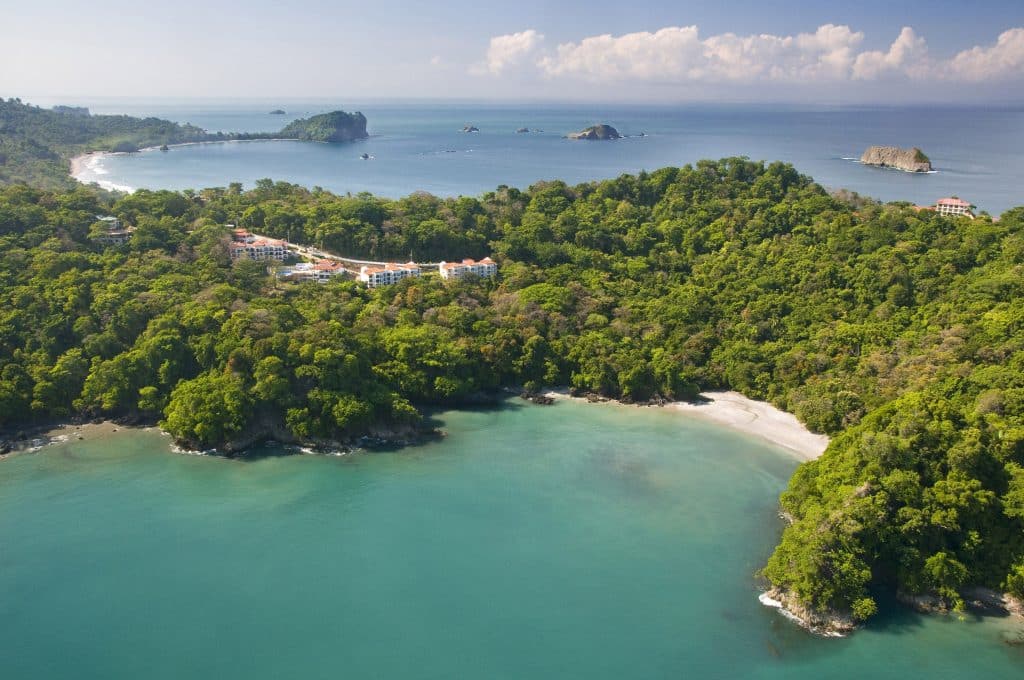
Costa Rica has positioned itself as a stable hospitality market in Central America because its tourism model is not dependent on a single product. While many destinations rely heavily on beach tourism or all-inclusive resort development, Costa Rica offers a broader platform: rainforest lodges, boutique hotels, wellness retreats, volcano destinations, wildlife experiences, surf towns, eco-lodges, cultural travel, and luxury nature-based stays. This diversity matters to investors because it reduces dependence on one type of traveler or one geographic experience. A hotel acquisition in Costa Rica can be positioned around wellness, adventure, conservation, romance, family travel, luxury nature, or multi-destination itineraries. For institutional buyers, that creates strategic flexibility. A property can be repositioned, packaged, rebranded, or connected to experience-based tourism trends. Costa Rica’s tourism identity already supports this kind of value creation. The Instituto Costarricense de Turismo, or ICT, also offers an Investment Attraction Unit for investors interested in building or acquiring hotels, restaurants, theme parks, and other tourism-related businesses. The ICT provides general country information, tourism statistics, and investor resources that can support due diligence and market understanding.Regulatory Security and Predictable Frameworks
In hospitality investment, regulatory security is essential. Buyers need to understand permits, land status, operating licenses, tax considerations, labor obligations, environmental requirements, zoning, concessions where applicable, and the legal structure of the transaction. Costa Rica’s advantage is not that every process is simple. Hospitality acquisitions anywhere require careful legal, financial, operational, and environmental due diligence. The advantage is that Costa Rica offers a more predictable institutional framework than many higher-risk jurisdictions in the region. For investors comparing Costa Rica with other Central American or Caribbean markets, this can be a decisive factor. Predictability supports better valuation. It also helps investors understand the capital required after acquisition, the timeline for improvements, and the regulatory requirements for future expansion. PROCOMER also highlights Costa Rica’s special regimes, including the Free Zone Regime, which offers benefits and tax incentives granted by the Costa Rican government to strengthen international competitiveness and attract foreign direct investment. While these regimes do not automatically apply to every hotel acquisition, they are relevant for investors evaluating broader business structures, tourism-related services, export-oriented operations, or complementary investment models.
Costa Rica vs. Higher-Risk Regional Markets
When investors compare Costa Rica with other Central American or Caribbean destinations, the conversation should go beyond scenery and acquisition price. A lower purchase price in a higher-risk jurisdiction may not translate into a stronger investment. Political volatility, unclear permitting, climate exposure, import dependence, infrastructure limitations, labor shortages, or inconsistent tourism demand can affect operating margins and long-term asset value. Costa Rica’s positioning as a lower-risk hospitality jurisdiction is built on several advantages:- A stable democratic tradition
- Strong international recognition
- Established tourism institutions
- Access to official tourism data
- Investment attraction support
- Strategic proximity to key markets
- Experience-based tourism demand
- A sustainability-led destination brand
- A diversified hotel and travel product
Hotel Acquisition in Costa Rica: What Investors Should Evaluate
A successful hotel acquisition in Costa Rica requires more than identifying a property in a desirable destination. Institutional buyers should evaluate the full investment profile. Key areas include financial performance, legal status, permits, land ownership, environmental considerations, staffing, operating systems, brand reputation, distribution channels, direct booking potential, maintenance needs, energy and water systems, supplier relationships, seasonality, and expansion potential. The strongest opportunities are often those where the asset has a clear path to value creation. This may involve repositioning the brand, improving direct reservations, strengthening the guest experience, adding wellness or adventure packages, improving sustainability credentials, upgrading rooms, or connecting the property more effectively to Costa Rica’s experience-based tourism demand. Costa Rica is especially well suited to this type of strategy because its destination brand supports boutique, nature-based, and experiential hospitality.Institutional Confidence and Investor Protection
For institutional investors, investor protection in Central America is not only a legal question. It is also a question of institutional confidence. Costa Rica’s investment ecosystem is supported by organizations such as PROCOMER and the ICT, both of which provide resources that help investors understand the market. ICT’s Spanish-language investment attraction page also notes that the institution has a cooperation agreement with PROCOMER for attracting investment to Costa Rica and supporting investors. That coordination matters. Hospitality investors benefit when tourism promotion, investment attraction, and sector information are connected through recognized public institutions. Costa Rica has also attracted foreign direct investment by positioning itself around democracy, talent, commercial openness, innovation, and sustainable development. PROCOMER reported record foreign direct investment in 2023 and noted that tourism represented part of the investment breakdown, reflecting broader confidence in the country’s investment environment.