


In the heart of Costa Rica’s tropical dry forest, mornings begin with sound long before sunrise. The distant call of chachalacas echoes through the trees, toucans glide overhead, and colorful motmots perch quietly along forest trails. Located beside Rincón de la Vieja National Park, Hacienda Guachipelín has become one of the region’s most remarkable destinations for birdwatching, offering visitors the opportunity to encounter an incredible diversity of species within one of Costa Rica’s most unique ecosystems.
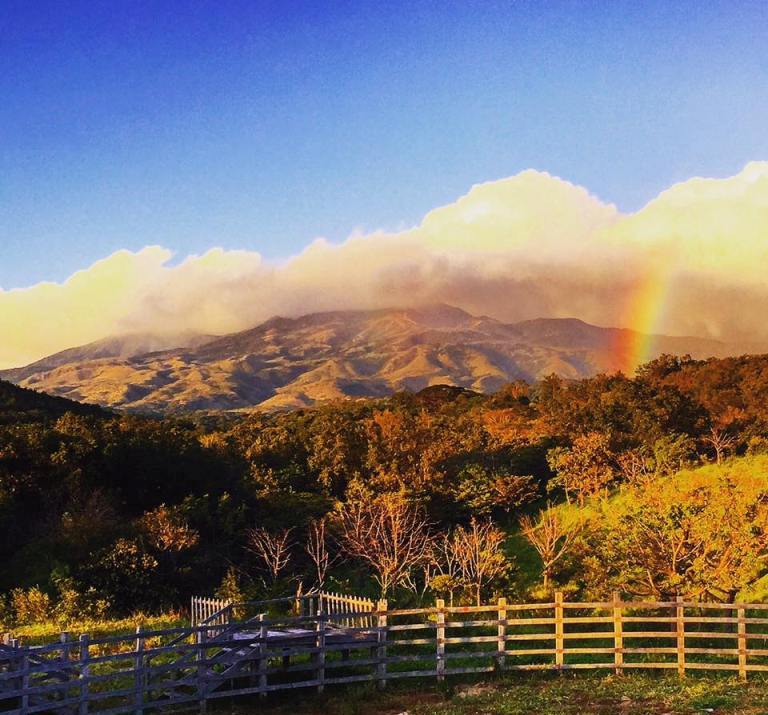
The landscapes surrounding the hacienda — volcanic slopes, rivers, waterfalls, forests, open savannahs, and gardens — create a mosaic of habitats that support a remarkable diversity of resident and migratory bird species throughout the year. The eBird checklist recorded during this year’s Global Big Day revealed just how rich and vibrant the birdwatching experience can be in this part of northern Costa Rica.
Sightings include the Red-billed Pigeon (Patagioenas flavirostris), Inca Dove (Columbina inca), White-winged Dove (Zenaida asiatica), and the tiny but charismatic Ferruginous Pygmy-Owl (Glaucidium brasilianum). Birders also recorded several specialized forest species including the Ruddy Woodcreeper (Dendrocincla homochroa), Ivory-billed Woodcreeper (Xiphorhynchus flavigaster), and Streak-headed Woodcreeper (Lepidocolaptes souleyetii), species closely associated with healthy tropical forest ecosystems.
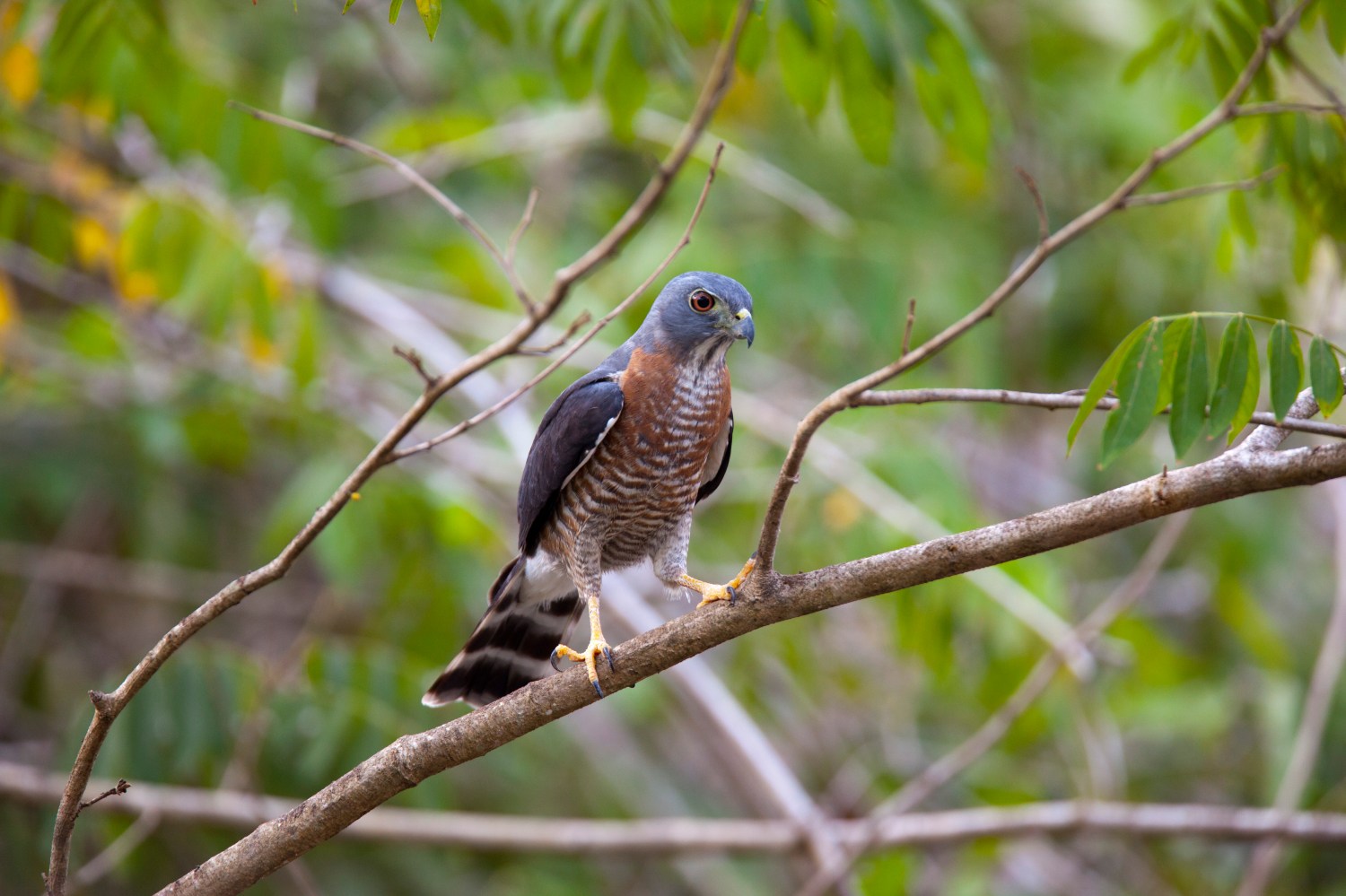
The Tropical Dry Forest: One of Costa Rica’s Hidden Birding Gems
While many travelers immediately think of rainforests or cloud forests when imagining Costa Rica birdwatching, Guanacaste’s tropical dry forest offers a completely different but equally rewarding experience. The region’s seasonal climate, volcanic landscapes, and diverse vegetation create ideal conditions for many species that are difficult to observe elsewhere in the country.
During the Green Season beginning in May, the forest transforms dramatically. Trees regain their lush foliage, rivers flow more strongly, flowers bloom, and bird activity intensifies. This seasonal transition coincides perfectly with Global Big Day and makes Hacienda Guachipelín an exceptional destination for birding enthusiasts and wildlife photographers.
Even casual visitors often become fascinated by the sounds and colors surrounding them. The bubbling calls of the Montezuma oropendola (Psarocolius montezuma), the striking blue plumage of the turquoise-browed motmot (Eumomota superciliosa), the vibrant blue Red-legged Honeycreeper (Cyanerpes cyaneus ), the bright red plumage of the Red-crowned Ant-Tanager (Habia rubica ), the ebony of the Melodious Blackbird (Dives dives ) and the Great-Tailed Grackle (Quiscalus mexicanus ). The unmistakable cries of the white-throated magpie-jay (Calocitta formosa) become part of the natural soundtrack of the hacienda.
Bird Species Recorded During Global Big Day
The eBird observations registered around Hacienda Guachipelín during Global Big Day showcased the extraordinary diversity of birds found within the tropical dry forest ecosystem surrounding Rincón de la Vieja.
Open areas and forest edges revealed species such as the Olivaceous Woodcreeper (Sittasomus griseicapillus), social flycatcher (Myiozetetes similis), great kiskadee (Pitangus sulphuratus), tropical kingbird (Tyrannus melancholicus), hoffman´s woodpecker (Melanerpes hoffmannii), streak-backed oriole (Icterus pustulatus), and Lesson’s Motmot (Momotus lessonii). The distinctive calls of the white-fronted parrot (Amazona albifrons) and orange-fronted parakeet (Eupsittula canicularis) could also be heard flying above the forest canopy.
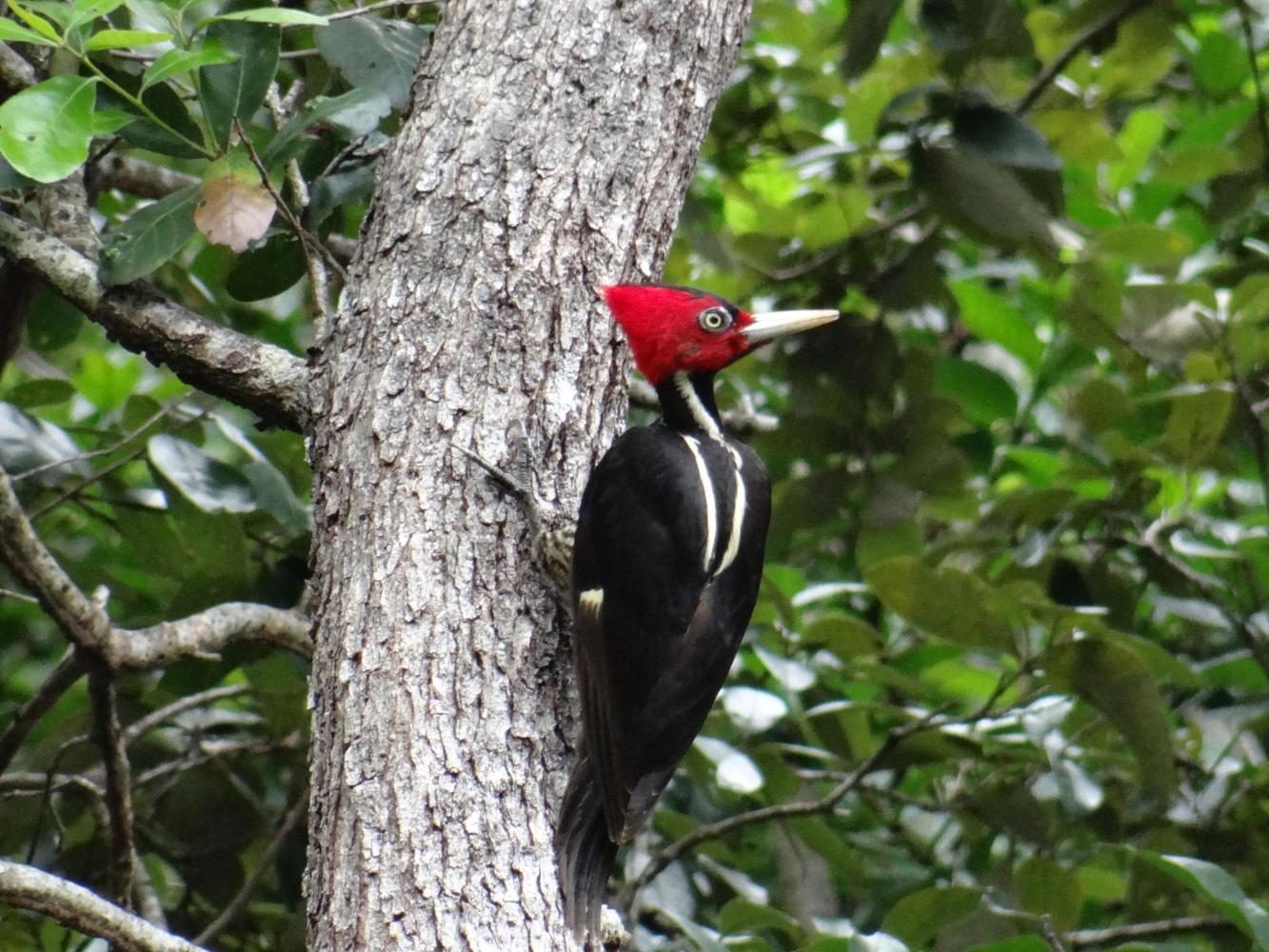
Within wooded areas, birdwatchers encountered species including the White-necked Puffbird (Notharchus hyperrhynchus), lesser greenlet (Pachysylvia decurtata), Gartered Violaceous Trogon (Trogon caligatus), black-headed trogon (Trogon melanocephalus), northern barred-woodcreeper (Dendrocolaptes sanctithomae), and the rufous-naped wren (Campylorhynchus rufinucha). The forests also provide habitat for the Pale-billed Woodpecker (Campephilus guatemalensis), the Morelet’s Seedeater (Sporophila morelleti) and the , a highly characteristic species of Guanacaste’s dry forests.
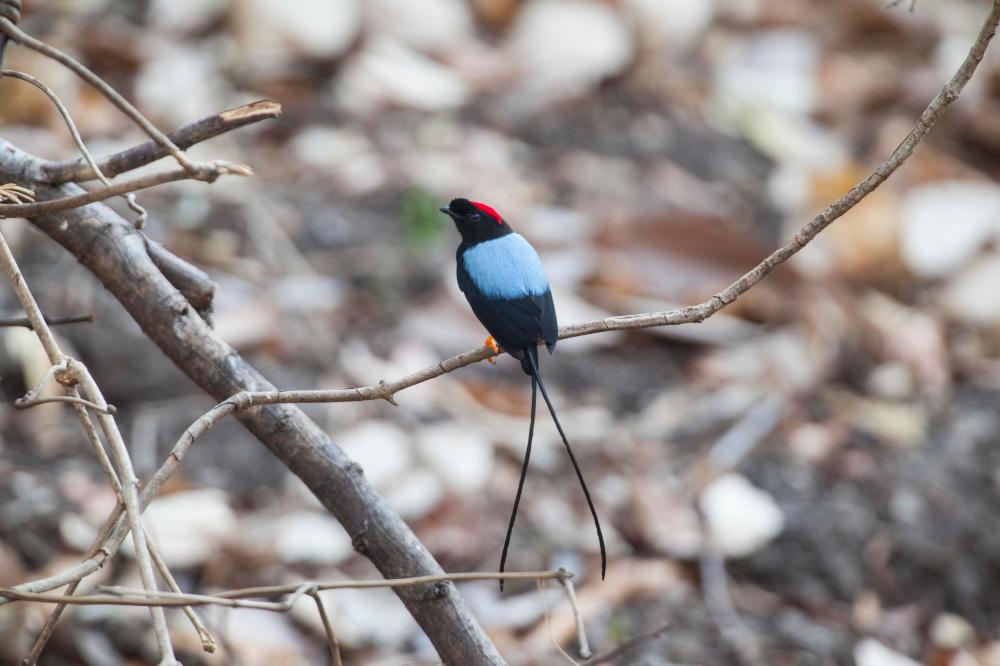
Colorful species added flashes of movement throughout the trails and gardens, including the keel-billed toucan (Ramphastos sulfuratus), long-tailed manakin (Chiroxiphia linearis), white-throated magpie-jay (Calocitta formosa), and cinnamon hummingbird (Amazilia rutila). The rich biodiversity of the region also supports species such as the yellow warbler (Setophaga petechia), Tennessee warbler (Leiothlypis peregrina), and various migratory birds that visit Costa Rica seasonally.
Raptors and scavengers soaring above the volcanic landscape included the black vulture (Coragyps atratus), and the turkey vulture (Cathartes aura These birds play a vital role in maintaining ecological balance within the dry forest ecosystem.
Other birds registered include the Spot-bellied Bobwhite (Colinus Leucopogon), Groove-billed Ani (Crotophaga sulcirostris), the colorful, Common Squirrel-Cuckoo (Piaya cayana)
A special mention goes to the iridescent hummingbirds as the race from flower to flower in search of pollen. The Plain-capped Starthroat (Heliomaster constantia), Canivet’s Emerald (Cynanthus canivetii), the blue-vented hummingbird (Saucerottia hoffmanni) and the Cinnamon Hummingbird (Amazilia rutile)
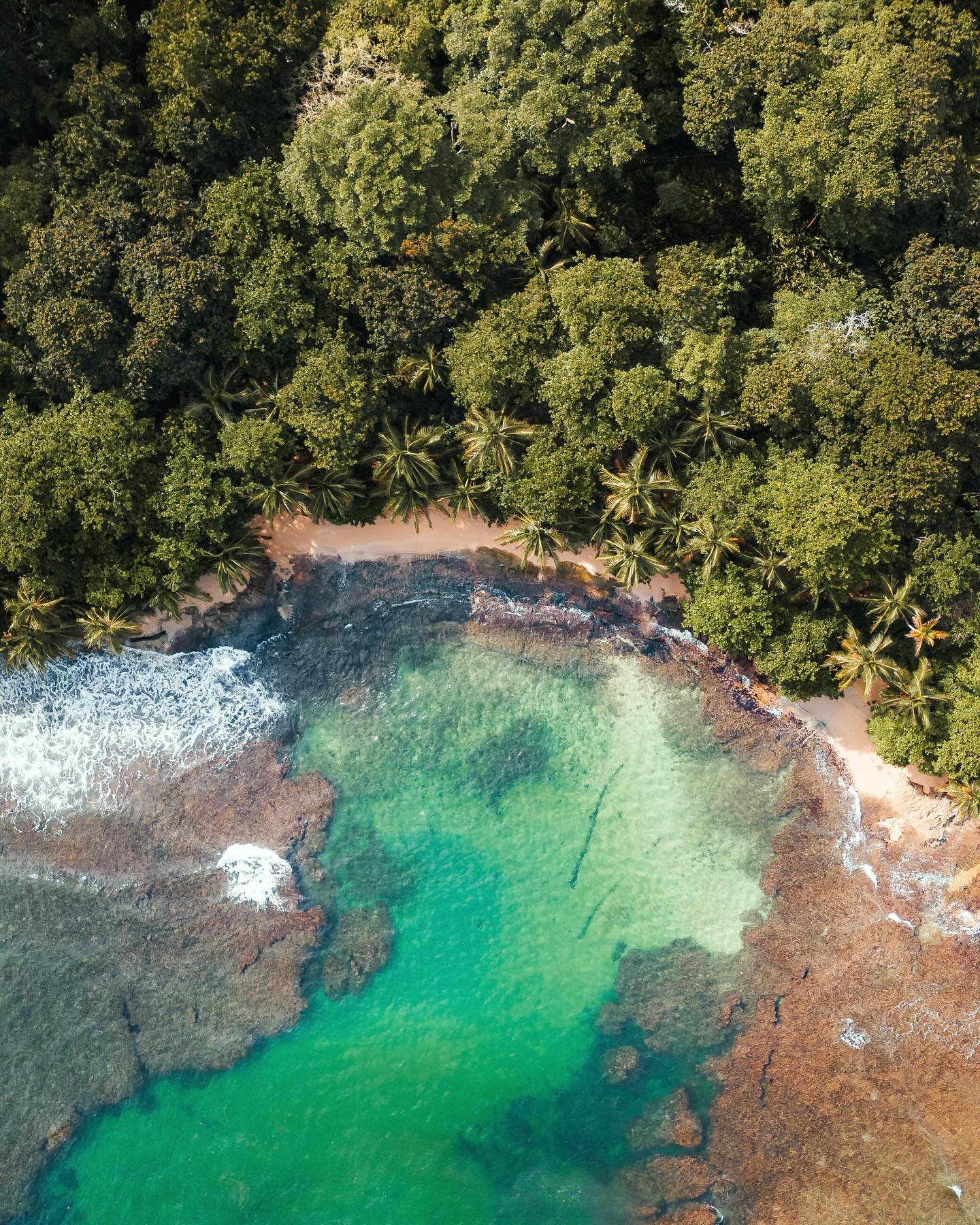
Near rivers and wetter areas, observers also recorded species associated with water and riparian habitats, demonstrating the environmental diversity found across the property and surrounding protected lands.
Birdwatching as a Sustainable Tourism Experience
Birdwatching has become one of the world’s fastest-growing forms of sustainable tourism because it encourages conservation, environmental education, and low-impact travel experiences. Costa Rica has emerged as a global leader in birding tourism thanks to its extraordinary biodiversity and strong conservation culture.
At Hacienda Guachipelín, birdwatching naturally complements the property’s broader commitment to nature-based tourism experiences. Guests can explore forest trails, volcanic landscapes, waterfalls, and rivers while learning about the ecosystems that make Guanacaste so unique.
Unlike fast-paced tourism experiences, birdwatching invites travelers to slow down, observe carefully, and connect more deeply with the natural world. A guided walk at sunrise may reveal white-tipped doves (Leptotila verreauxi ) perched quietly in the canopy, orange-chinned parakets (Brotogeris jugularis) crossing overhead, Great Curassow (Crax rubra) and Thicket Tinamou (Crypturellus cinnamomeus) hiding on the forest floor, (or blue-vented hummingbirds (Saucerottia hoffmanni) feeding among tropical flowers beside the trails.
Global Big Day itself also demonstrates the growing importance of citizen science. Every observation uploaded to eBird contributes valuable scientific data that helps researchers monitor bird populations, migratory patterns, and biodiversity trends around the world.
More Than Just Birds
What makes birdwatching at Hacienda Guachipelín especially memorable is that it becomes part of a much larger experience within the landscapes surrounding Rincón de la Vieja Volcano.
Visitors may begin the morning observing motmots, trogons, parrots, and flycatchers before spending the afternoon horseback riding through the forest, hiking near waterfalls, soaking in volcanic hot springs, or enjoying the Río Negro Hot Springs and mud baths. The combination of wildlife, adventure, wellness, and sustainability creates a uniquely immersive Costa Rica travel experience.
Even travelers who do not initially consider themselves birdwatchers often leave with a newfound appreciation for the biodiversity of Guanacaste after witnessing the richness of life that exists throughout the hacienda’s forests and volcanic landscapes.
The diversity of smaller forest birds and songbirds recorded during Global Big Day further highlights the ecological richness surrounding Hacienda Guachipelín. Observers documented species such as the Masked Tityra (Tityra semifasciata), Rose-throated Becard (Pachyramphus aglaiae), Yellow-olive Flatbill (Tolmomyias sulphurescens), Northern Beardless-Tyrannulet (Camptostoma imberbe), Eastern Wood-Pewee (Contopus virens), Bright-rumped Attila (Attila spadiceus), Western Kingbird (Tyrannus verticalis), and Philadelphia Vireo (Vireo philadelphicus). The forest understory and dense vegetation also revealed species including the Long-billed Gnatwren (Ramphocaenus melanurus), White-browed Gnatcatcher (Polioptila bilineata), and White-lored Gnatcatcher (Polioptila albiloris).
Wrens and forest songbirds added even more life and movement to the tropical dry forest landscape. Birdwatchers recorded the Rufous-backed Wren (Campylorhynchus capistratus), Banded Wren (Thryophilus pleurostictus), Rufous-and-white Wren (Thryophilus rufalbus), and Gray-breasted Wood-Wren (Henicorhina leucophrys), along with seasonal and resident species such as Swainson’s Thrush (Catharus ustulatus), Clay-colored Thrush (Turdus grayi), Scrub Euphonia (Euphonia affinis), Yellow-crowned Euphonia (Euphonia luteicapilla), Yellow-throated Euphonia (Euphonia hirundinacea), Stripe-headed Sparrow (Peucaea ruficauda), Olive Sparrow (Arremonops rufivirgatus), and Chestnut-capped Warbler (Basileuterus delattrii).

Celebrating Biodiversity in Guanacaste
Global Big Day serves as an important reminder that Costa Rica’s biodiversity is one of the country’s greatest treasures. The birds recorded around Hacienda Guachipelín reflect the health and ecological importance of the tropical dry forest ecosystem surrounding Rincón de la Vieja National Park.
From the songs of the elusive Lesser Ground-Cuckoo (Morococcyx erythropygus) echoing through the trees to the vibrant colors of the Tody Motmot (Hylomanes momotula) and the collared aracari (Pteroglossus torquatus) or the along the trails, birdwatching in Guanacaste offers travelers a deeper connection to the landscapes, wildlife, and conservation values that define Costa Rica.
For birders, photographers, and nature lovers alike, Hacienda Guachipelín continues to be one of the most rewarding places in Costa Rica to experience the extraordinary biodiversity of the tropical dry forest.
FAQ: Birdwatching at Hacienda Guachipelín
What birds can be seen at Hacienda Guachipelín?
Visitors may observe motmots, trogons, parrots, hummingbirds, woodcreepers, orioles, hawks, vultures, flycatchers, and many other tropical dry forest bird species.
Is Guanacaste good for birdwatching?
Yes. Guanacaste is one of Costa Rica’s best birdwatching regions thanks to its tropical dry forest ecosystem, volcanic landscapes, wetlands, and migratory bird activity.
What is Global Big Day?
Global Big Day is an international birdwatching event organized through eBird that encourages people around the world to observe and record bird species while contributing to global biodiversity research.
When is the best time for birdwatching in Costa Rica?
Birdwatching is excellent year-round in Costa Rica, but early mornings during both the dry season and Green Season offer especially active bird activity and ideal photography conditions.
What Flycatchers can I see in Hacienda Guachipelin?
There are registered sightings of the following flycatchers:
- Boat-billed FlycatcherMegarynchus pitangua
- Dusky-capped FlycatcherMyiarchus tuberculifer
- Nutting’s FlycatcherMyiarchus nuttingi
- Brown-crested FlycatcherMyiarchus tyrannulus
- Yellow-bellied FlycatcherEmpidonax flaviventri
- Ochre-bellied FlycatcherMionectes oleagineus
- Sulphur-bellied FlycatcherMyiodynastes luteiventris